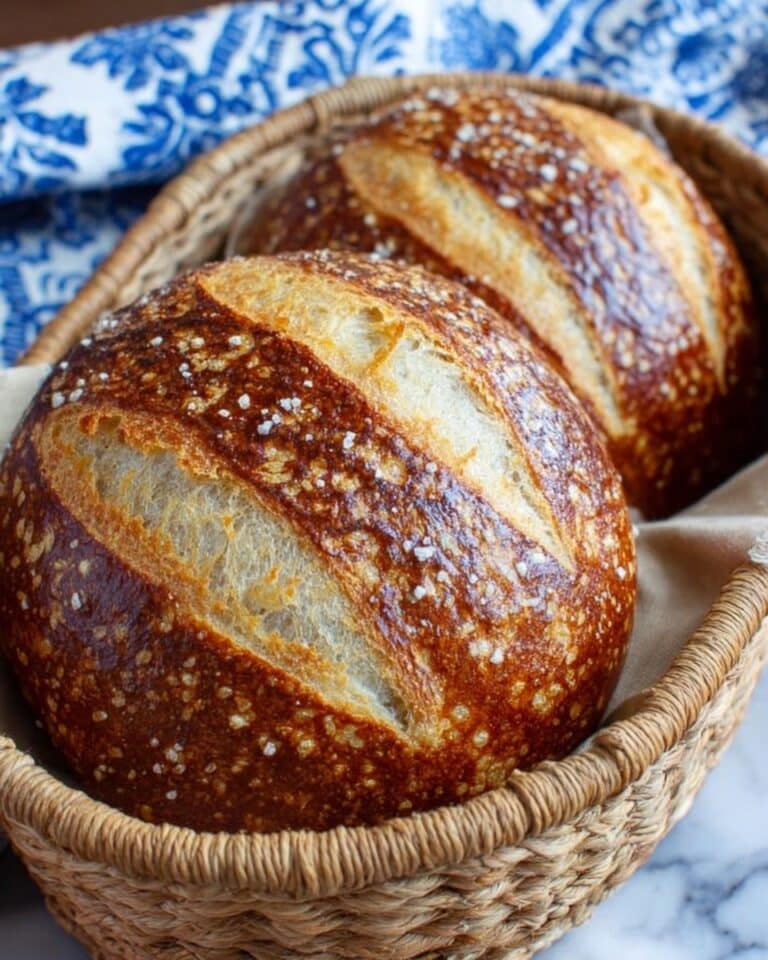
No-Knead Rosemary Sea Salt Bread Recipe
Introduction
Simple yet flavorful, this No-Knead Rosemary Sea Salt Bread delivers a crisp crust and an airy, herb-infused crumb without any heavy labor. Using minimal ingredients and a slow rise, it’s perfect for home bakers who want fresh, aromatic bread with ease.
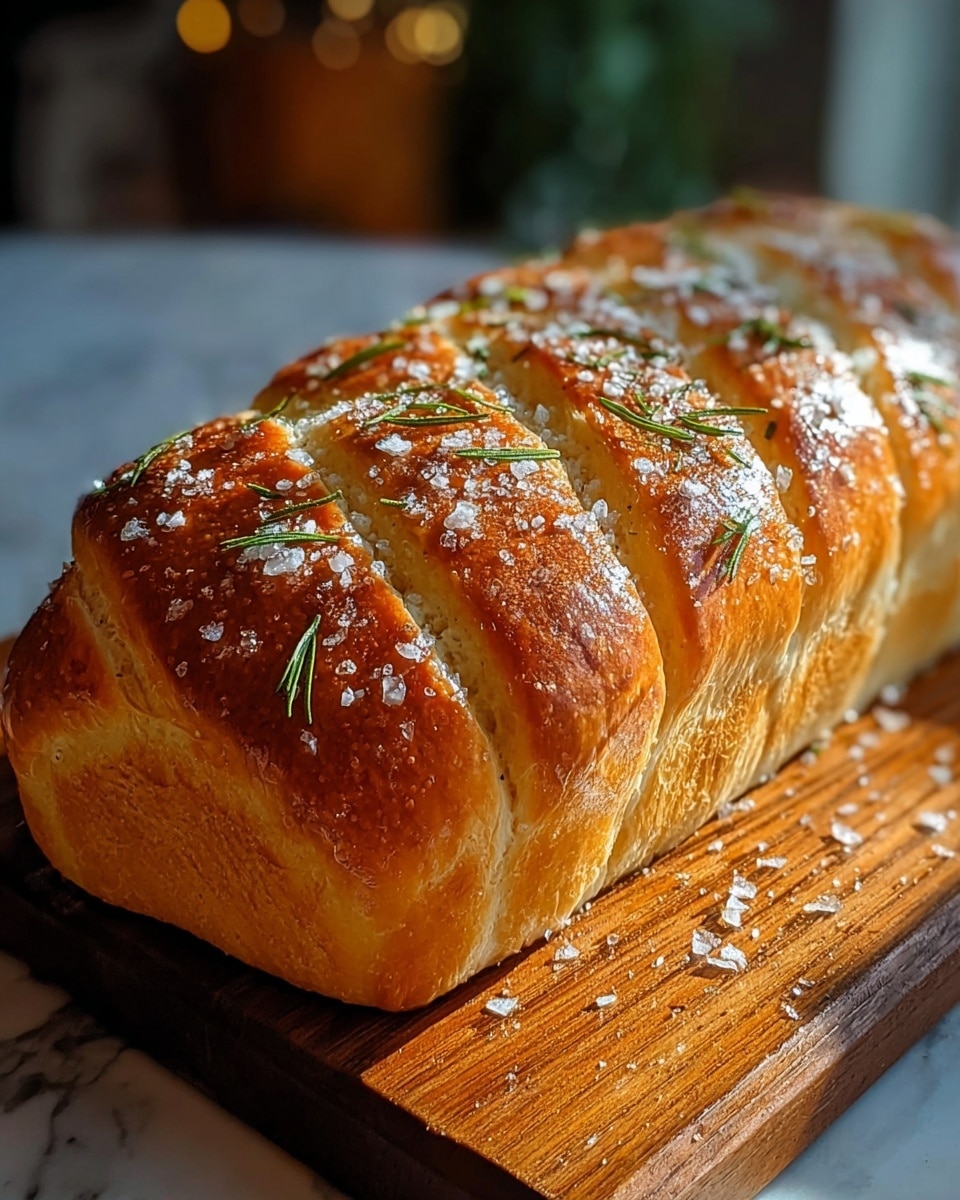
Ingredients
- 3 cups (360 g) all-purpose flour
- 1½ cups (360 ml) lukewarm water
- ¼ teaspoon instant yeast
- 1½ teaspoons coarse sea salt (plus extra for topping)
- 2 teaspoons fresh rosemary, finely chopped
- 1 tablespoon extra-virgin olive oil (optional)
Instructions
- Step 1: In a large mixing bowl, combine flour, instant yeast, and 1½ teaspoons sea salt. Stir briefly to distribute the yeast evenly. Make a well in the center and add the lukewarm water, olive oil (if using), and chopped rosemary. Stir with a sturdy spoon until a shaggy, slightly sticky dough forms. No kneading needed.
- Step 2: Cover the bowl tightly with plastic wrap or a clean towel. Let the dough rise at room temperature (ideally 70–75°F) for about 2 hours, until doubled in size with bubbles on the surface.
- Step 3: Generously flour a clean work surface. Gently turn the risen dough onto it, handling carefully to keep as much air as possible. With floured hands, fold the edges inward to shape a rough ball. Place on a parchment-lined sheet and sprinkle the top generously with extra coarse sea salt.
- Step 4: Preheat your oven to 475°F (245°C) with a 4-quart Dutch oven (with lid) inside for at least 30 minutes to get it very hot.
- Step 5: Carefully remove the Dutch oven using oven mitts. Lift the parchment with the dough and place it inside the pot. Cover with the lid and bake for 30 minutes to trap steam and allow the loaf to rise and brown.
- Step 6: Remove the lid and bake uncovered for an additional 15–20 minutes, until the crust is deep amber and sounds hollow when tapped. Let cool on a wire rack before slicing.
Tips & Variations
- Use water warm to the touch (about 105°F) to activate the yeast without killing it.
- Cover the dough tightly during rising to prevent a dry skin and ensure even expansion.
- For a bright twist, add a teaspoon of lemon zest to the dough or sprinkle crushed red pepper flakes on top before baking.
- Try swapping half the flour for whole-wheat flour or replacing rosemary with thyme or sage for different flavors.
- If you don’t have a Dutch oven, bake on a preheated baking stone with a pan of hot water placed inside the oven to create steam.
Storage
Allow the bread to cool completely before storing. Keep whole or sliced bread in a paper bag inside a sealed container to maintain crust crispness and crumb moisture. Store at room temperature for up to 4 days or freeze for up to 3 months. To reheat, warm slices at 350°F (175°C) for 5–7 minutes, or heat a whole loaf wrapped loosely in foil for 10–12 minutes to restore crust crunch.
How to Serve
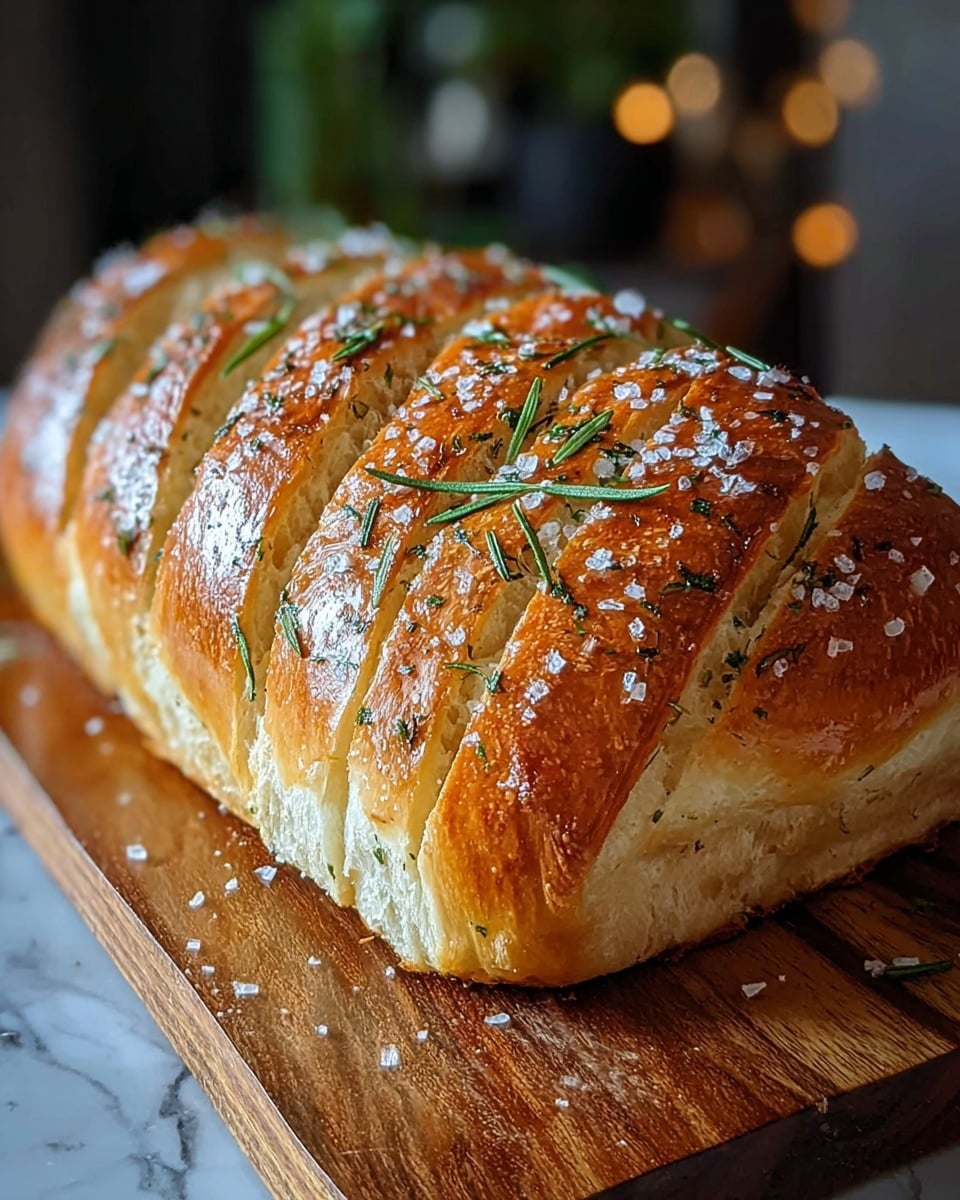
Serve this delicious recipe with your favorite sides.
FAQs
Can I make the dough the night before?
Yes, you can prepare the dough and refrigerate it overnight for a slower fermentation. Bring it back to room temperature before shaping and baking.
What if I don’t have a Dutch oven?
You can use a preheated baking stone and place a tray with hot water in the oven to create steam, which helps develop the crust’s crispness.
PrintNo-Knead Rosemary Sea Salt Bread Recipe

This No-Knead Rosemary Sea Salt Bread is a simple yet flavorful artisan-style loaf featuring a high-hydration dough infused with fragrant fresh rosemary and a crunchy coarse sea salt crust. With minimal effort and no kneading required, this recipe allows you to enjoy bakery-quality bread at home baked in a hot Dutch oven for a perfect crispy crust and airy crumb.
- Prep Time: 15 min
- Cook Time: 45 min
- Total Time: 2 hours 45 min
- Yield: 1 loaf (about 8–10 servings) 1x
- Category: Dinner Recipes
- Method: Baking
- Cuisine: International
- Diet: Vegetarian
Ingredients
Main Ingredients
- 3 cups (360 g) all-purpose flour
- 1 ½ cups (360 ml) lukewarm water
Leavening
- ¼ teaspoon instant yeast
Seasonings & Herbs
- 1 ½ teaspoons coarse sea salt (plus extra for topping)
- 2 teaspoons fresh rosemary, finely chopped
- 1 tablespoon extra-virgin olive oil (optional)
Instructions
- Mixing the Dough: In a large mixing bowl, combine the flour, instant yeast, and 1 ½ teaspoons of sea salt. Stir briefly to distribute the yeast evenly. Create a well in the center and pour in the lukewarm water, drizzle the olive oil if using, and add the chopped rosemary. Using a sturdy spoon, stir until the mixture forms a shaggy, slightly sticky dough. No kneading is needed as gluten develops during the long rise.
- First Rise (Bulk Fermentation): Cover the bowl tightly with plastic wrap or a clean kitchen towel. Let the dough rise at room temperature (ideally 70-75°F) for about 2 hours until it doubles in size and has visible bubbles, allowing the rosemary flavor to infuse and an airy texture to develop.
- Shaping & Preparing for Bake: Generously flour a clean work surface. Gently turn the risen dough onto it without deflating completely. With floured hands, fold edges toward the center to shape a rough ball. Place the dough ball on a parchment sheet and sprinkle generously with extra coarse sea salt to create a crisp, crackly crust.
- Baking in a Hot Dutch Oven: Preheat the oven to 475°F (245°C) with a 4-quart Dutch oven with lid placed on the middle rack for at least 30 minutes to ensure intense heat. Carefully remove the hot Dutch oven using oven mitts, lift the parchment with the dough and place it inside. Cover tightly with the lid to trap steam.
- Bake Covered: Bake the dough covered for 30 minutes to allow steam to expand the loaf, promoting oven spring and crust formation.
- Finish Uncovered: Remove the lid and continue baking for an additional 15-20 minutes until the crust is deep amber and the loaf sounds hollow when tapped on the bottom. This step develops the signature crackled crust and rosemary aroma.
- Cool the Bread: Remove the bread from the Dutch oven and transfer it to a wire rack. Let it cool at least 30 minutes before slicing to prevent sogginess and retain texture.
Notes
- Use lukewarm water around 105°F to avoid killing the yeast but ensure proper fermentation.
- Cover the dough tightly during rising to prevent skin formation and ensure even expansion.
- The dough should feel sticky; avoid adding excessive flour to maintain a light crumb.
- Optional flavor variations: add lemon zest to the dough for brightness, or red-pepper flakes on top for subtle heat.
- If a Dutch oven is unavailable, use a preheated baking stone with a tray of hot water to simulate steam.
- Score the dough lightly before baking to control expansion and create patterns.
- Store leftover bread in a paper bag inside a sealed container to maintain crust crispness; refrigerate up to 4 days or freeze up to 3 months.
- Reheat bread wrapped in foil or on a baking sheet to revive crust and softness.
Keywords: no-knead bread, rosemary bread, sea salt bread, Dutch oven bread, artisan bread, easy bread recipe, homemade bread