Classic Herb Stuffing Recipe
Introduction
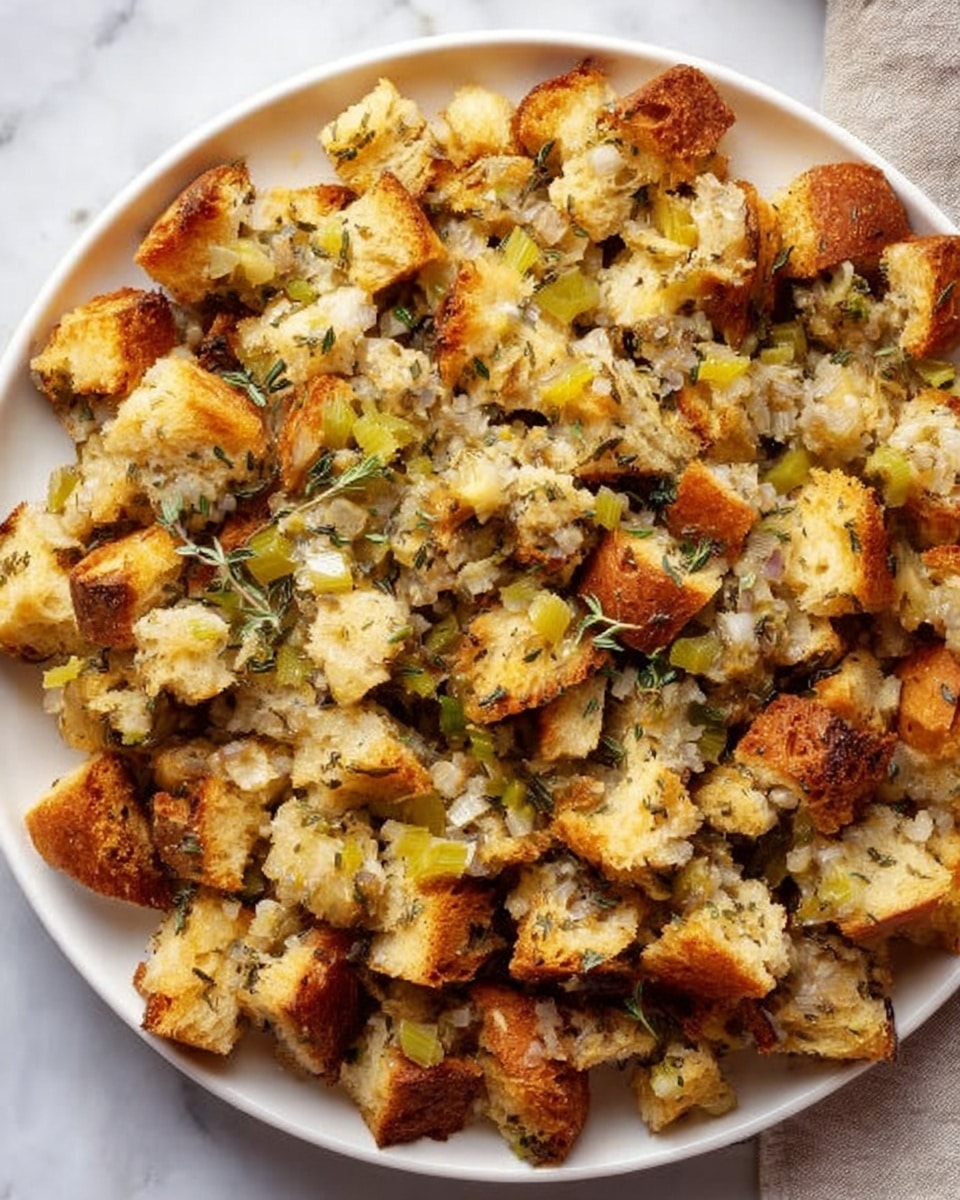
Classic Herb Stuffing is a comforting and flavorful side dish perfect for holiday meals or any special occasion. Made with fresh herbs, tender vegetables, and crispy toasted bread, this recipe brings traditional flavors to life with a moist, satisfying texture.
Ingredients
- 18-24 oz cubed bread (about 12-14 cups, toasted or stale, 1/2-inch pieces)
- 3 tbsp chopped fresh sage (or 1 tbsp dried sage)
- Black pepper (freshly ground preferred)
- 3 tbsp chopped fresh parsley
- 3 tbsp chopped fresh rosemary (or 1 tbsp dried rosemary)
- Kosher salt (to taste)
- 2 1/2 cups chicken or vegetable broth (preferably low-sodium)
- 1 cup unsalted butter
- 2 large eggs (room temperature)
- 6 garlic cloves, minced (freshly minced for best aroma)
- 3 cups chopped sweet onion (about 2 large, 1/2-inch dice)
- 2 cups diced celery (about 1/2-inch pieces)
- Fresh herbs for sprinkling (sage, parsley, or rosemary)
Instructions
- Step 1: Cut the bread into 1/2-inch cubes and spread them on a baking sheet. If the bread is fresh, toast at 350°F for about 15 minutes, stirring halfway through, until dry and lightly golden. Let cool, then transfer to a large mixing bowl.
- Step 2: Melt butter in a large skillet over medium heat. Add diced onions, celery, and a pinch of salt. Cook for 8-10 minutes, stirring occasionally, until vegetables are soft and onions lightly caramelize. Add minced garlic and cook for 1 more minute.
- Step 3: Stir in fresh sage, parsley, and rosemary, cooking for 1 minute while stirring constantly to release flavors. Add 1 cup broth, scrape up any bits from the pan, and simmer for another minute.
- Step 4: Pour the hot vegetable and herb mixture over the bread cubes. Toss gently but thoroughly to coat every piece. The heat will soften the bread slightly.
- Step 5: Whisk together remaining 1 1/2 cups broth and room-temperature eggs in a separate bowl until smooth. This will bind the stuffing with a moist, custard-like texture.
- Step 6: Pour the broth-egg mixture over the bread and vegetables. Stir gently to distribute evenly. Transfer to a buttered baking dish, spreading in an even layer. Bake at 350°F for 45-50 minutes until golden brown and a knife inserted in the center comes out clean. Cover with foil for the first 30 minutes if the top browns too fast, then uncover for the last 15-20 minutes.
- Step 7: Remove from oven and let rest 10 minutes. Sprinkle with fresh herbs before serving for a burst of color and flavor.
Tips & Variations
- Use stale or toasted bread for best texture to avoid soggy stuffing.
- Substitute vegetable broth to make this recipe vegetarian.
- Add sautéed mushrooms or cooked sausage for extra flavor and texture.
- Cover the baking dish with foil during baking to prevent over-browning.
Storage
Store leftovers in an airtight container in the refrigerator for up to 3 days. Reheat gently in the oven at 325°F until warmed through to maintain crispiness. This stuffing can also be frozen for up to 2 months; thaw overnight in the refrigerator before reheating.
How to Serve
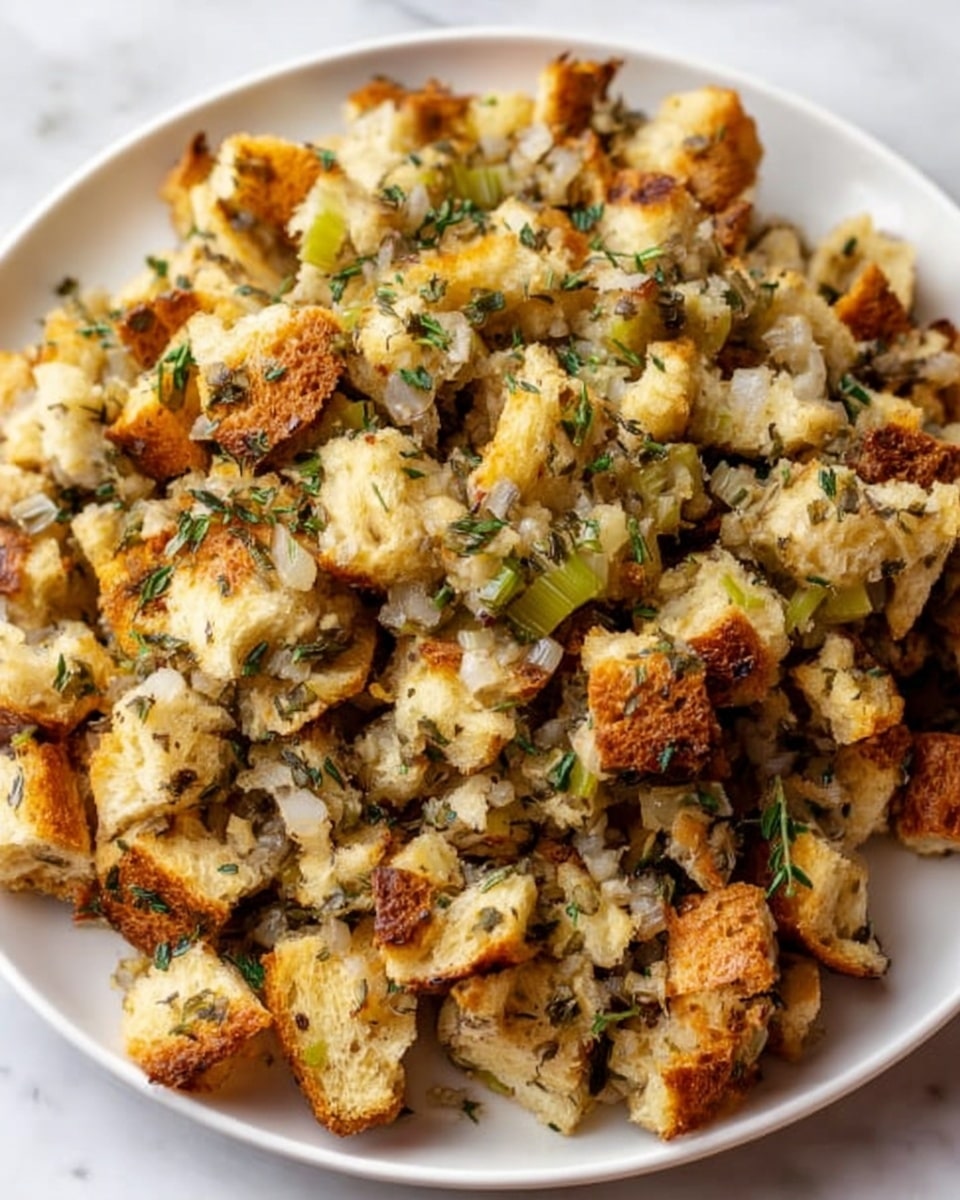
Serve this delicious recipe with your favorite sides.
FAQs
Can I use dried herbs instead of fresh?
Yes, dried herbs work well; use about one-third the amount of fresh herbs since they are more concentrated in flavor.
What type of bread works best for stuffing?
Day-old or slightly stale bread with a sturdy crumb, such as French, sourdough, or country white bread, works best because it absorbs the broth without becoming mushy.
PrintClassic Herb Stuffing Recipe
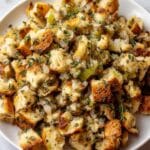
Classic Herb Stuffing is a flavorful and aromatic side dish made with toasted bread cubes, fresh herbs, sautéed vegetables, and a savory broth-egg custard. This traditional recipe is baked until golden brown and topped with fresh herbs, making it perfect for holiday meals or comforting family dinners.
- Prep Time: 25 minutes
- Cook Time: 50 minutes
- Total Time: 1 hour 15 minutes
- Yield: 10 servings 1x
- Category: Side Dish
- Method: Baking
- Cuisine: American
- Diet: Vegetarian
Ingredients
Bread Mixture
- 18–24 oz cubed bread (about 12–14 cups, toasted or stale, 1/2-inch pieces)
- 3 tbsp chopped fresh sage (or 1 tbsp dried sage)
- 3 tbsp chopped fresh parsley
- 3 tbsp chopped fresh rosemary (or 1 tbsp dried rosemary)
- Kosher salt (to taste)
- Black pepper (freshly ground preferred)
- 2 1/2 cups chicken or vegetable broth (preferably low-sodium)
- 1 cup unsalted butter (Kerrygold preferred)
- 2 large eggs (room temperature)
- 6 garlic cloves, minced (freshly minced)
- 3 cups chopped sweet onion (about 2 large, 1/2-inch dice)
- 2 cups diced celery (about 1/2-inch pieces)
For Topping
- Fresh herbs for sprinkling (sage, parsley, or rosemary)
Instructions
- Prepare the Bread Base: Cut the bread into 1/2-inch cubes and spread them on a baking sheet. If the bread is fresh, toast the cubes at 350°F for about 15 minutes, stirring halfway through, until dry and lightly golden. Let cool slightly, then transfer to a large mixing bowl. This toasting prevents sogginess by allowing the bread to absorb broth evenly.
- Build the Aromatic Base: Melt the butter in a large skillet over medium heat. Add diced onions, celery, and a pinch of kosher salt. Sauté for 8-10 minutes, stirring occasionally, until vegetables are soft, translucent, and onions begin to caramelize. Add minced garlic and cook another minute until fragrant, enhancing the flavor foundation of the stuffing.
- Infuse the Herbs: Stir in chopped fresh sage, parsley, and rosemary (or their dried equivalents) and cook for 1 minute, stirring constantly to release essential oils. Add 1 cup of broth, scraping the pan to deglaze, then simmer for another minute to blend flavors.
- Combine Bread with Vegetable Mixture: Pour the hot butter, vegetable, and herb mixture over the toasted bread cubes in the mixing bowl. Toss gently but thoroughly to coat every piece with the flavorful mixture, softening the bread slightly in preparation for baking.
- Create the Binding Liquid: In a separate bowl, whisk together the remaining 1 1/2 cups broth with the room-temperature eggs until fully combined. This custard-like mixture will bind the stuffing, maintaining moisture and cohesion.
- Final Assembly and Baking: Pour the broth-egg mixture over the bread and vegetable mixture, stirring gently to combine evenly. Transfer to a buttered baking dish and spread in an even layer. Bake at 350°F for 45-50 minutes until golden brown and a knife inserted in the center comes out clean. Cover with foil for the first 30 minutes if browning too quickly, then uncover for the last 15-20 minutes to achieve a crispy top.
- Rest and Serve: Remove stuffing from the oven and let rest for 10 minutes to set the structure. Just before serving, sprinkle generously with fresh herbs like sage, parsley, or rosemary for added color and fresh flavor.
Notes
- Use stale or toasted bread to prevent mushy stuffing.
- Fresh herbs provide more vibrant flavor than dried but dried herbs can be substituted.
- Room-temperature eggs help create a smooth and even custard binding.
- Cover with foil during baking if the top begins to brown too fast.
- Low-sodium broth is preferred to control saltiness.
Keywords: Classic stuffing, herb stuffing, holiday side dish, baked stuffing, savory stuffing recipe, Thanksgiving stuffing, vegetable stuffing