Homemade Ciabatta Bread Recipe
Introduction
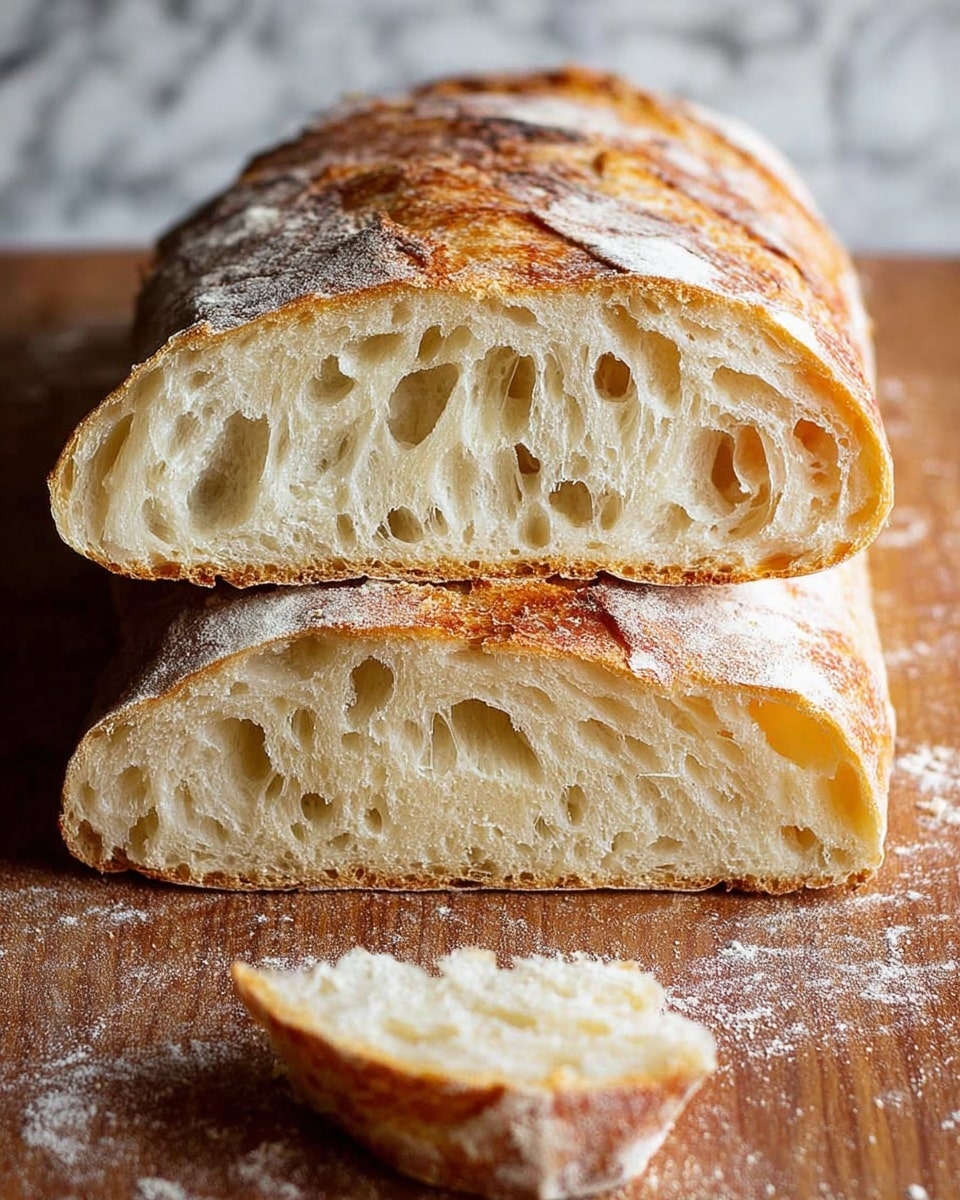
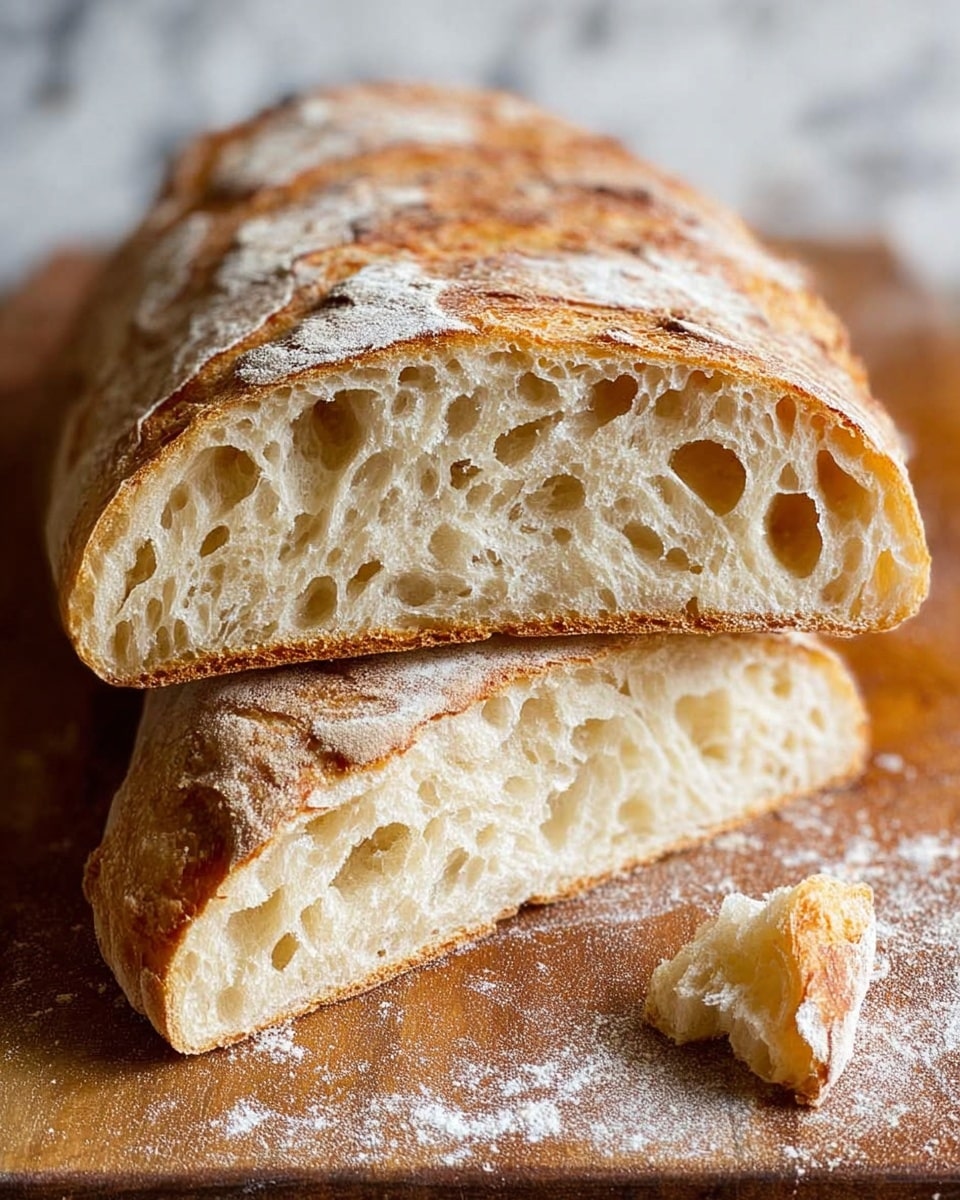
Ciabatta is a classic Italian bread known for its airy crumb and crisp crust. This homemade ciabatta recipe is simple and rewarding, perfect for novice and seasoned bakers alike. With just a few ingredients, you can create a delicious loaf that’s ideal for sandwiches or dipping in olive oil.
Ingredients
- 3 cups (360g) all-purpose or bread flour
- 1 ¼ tsp salt
- 1 tsp instant yeast
- 1 cup (240ml) lukewarm water
- 1 tbsp olive oil (for greasing)
Instructions
- Step 1: In a large bowl, whisk together the flour, salt, and yeast. Add the lukewarm water and stir with a spoon or spatula until a soft, sticky dough forms. It should look rough but uniform. Cover the bowl with a damp towel or plastic wrap.
- Step 2: Let the dough rise at room temperature for about 1 hour, or until it doubles in size and becomes bubbly on top.
- Step 3: Lightly flour your work surface and gently turn the dough out. Carefully fold it over itself 2 to 3 times to form a loose rectangle. Transfer the dough to a baking sheet lined with floured parchment paper. Dust the top lightly with flour and cover loosely. Let it rise for another 30 minutes.
- Step 4: Preheat your oven to 450°F (230°C). Bake the bread for 22 to 25 minutes, or until the crust turns golden and the loaf sounds hollow when tapped on the bottom.
- Step 5: Remove the bread and let it cool completely on a wire rack before slicing to preserve its airy texture.
Tips & Variations
- The dough is very wet—resist adding extra flour to keep the light crumb.
- Handle the dough with wet hands to avoid sticking and preserve air bubbles.
- Be gentle when folding to maintain the dough’s airy structure.
- Try adding herbs like rosemary or thyme for a flavor twist.
- For a crunchier crust, place a pan of water in the oven during baking to create steam.
Storage
Store ciabatta bread in a paper bag or wrapped loosely in a kitchen towel at room temperature for up to 2 days to maintain its crust. For longer storage, wrap the bread tightly in plastic wrap or place in a freezer-safe bag and freeze for up to 3 months. To reheat, warm in a preheated oven at 350°F (175°C) for 5–10 minutes to refresh the crust and crumb.
How to Serve
Serve this delicious recipe with your favorite sides.
FAQs
What is the olive oil used for in this recipe?
The olive oil is used to lightly grease the baking sheet or parchment paper, which helps prevent the sticky dough from sticking during the final rise and baking.
Can I use active dry yeast instead of instant yeast?
Yes, you can substitute active dry yeast, but you’ll need to dissolve it in the lukewarm water first and let it activate for about 5 to 10 minutes before mixing it with the flour.
PrintHomemade Ciabatta Bread Recipe

This Homemade Ciabatta Bread recipe yields a wonderfully airy and crusty Italian loaf made with a simple mixture of flour, yeast, salt, and water. The bread has a rustic texture with a crisp golden crust and an open crumb, perfect for sandwiches or dipping in olive oil. The dough is wet and sticky, requiring gentle handling to preserve air bubbles, and straightforward rising and baking steps make it accessible for home bakers.
- Prep Time: 15 minutes
- Cook Time: 25 minutes
- Total Time: 1 hour 40 minutes
- Yield: 1 large ciabatta loaf (about 8 servings) 1x
- Category: Bread
- Method: Baking
- Cuisine: Italian
- Diet: Vegetarian
Ingredients
Dry Ingredients
- 3 cups (360g) all-purpose or bread flour
- 1 ¼ tsp salt
- 1 tsp instant yeast
Wet Ingredients
- 1 cup (240ml) lukewarm water
Other
- 1 tbsp olive oil (for greasing)
Instructions
- Make the Dough: In a large bowl, whisk together the flour, salt, and yeast. Then add the lukewarm water and stir with a spoon or spatula until a soft, sticky dough forms. The dough should look rough but uniform. Cover with a damp towel or plastic wrap to prepare for rising.
- First Rise (1 hour): Let the dough rise at room temperature for about 1 hour, or until it has doubled in size and looks bubbly on top, indicating the yeast is active and the dough is aerated.
- Fold and Rest Again (30 minutes): Lightly flour your work surface and gently turn out the sticky dough. Carefully fold it over itself 2–3 times to form a loose rectangle, which helps strengthen the dough while preserving air bubbles. Transfer the dough to a baking sheet lined with floured parchment paper, dust the top lightly with flour, cover loosely, and let it rise for another 30 minutes.
- Preheat and Bake: Preheat your oven to 450°F (230°C). Place the bread in the oven and bake for 22 to 25 minutes, or until the crust is golden brown and the loaf sounds hollow when tapped on the bottom, signaling it is fully baked inside.
- Cool and Serve: Remove the ciabatta from the oven and let it cool completely on a wire rack before slicing. Cooling fully helps maintain the bread’s texture and prevents it from becoming gummy inside.
Notes
- The dough is very wet—don’t add more flour as it will change the texture.
- Handle the dough with wet hands to prevent sticking and to avoid deflating the bread’s air bubbles.
- Be gentle during folding to preserve the dough’s airy structure.
- Allow the bread to cool completely before slicing for the best crumb texture and flavor.
- The olive oil is typically used to grease the bowl to prevent sticking during rising, or the baking sheet/ parchment can be lightly greased as needed.
Keywords: ciabatta bread, homemade bread, Italian bread, crusty bread, easy bread recipe